


Disclaimer: This content is for informational purposes only and should not be considered legal, financial, or investment advice. Seller circumstances vary, and a failed listing does not necessarily indicate seller motivation or financial distress. Always conduct your own due diligence and follow applicable federal, state, and local laws when contacting property owners.
| Quick Answer: Failed listings are properties that were listed for sale but did not sell, including expired, canceled, or withdrawn listings. Seller psychology, including emotional attachment, loss aversion, anchoring, reference dependence, and confirmation bias, can influence pricing expectations and homeowners’ responses to market feedback. After an unsuccessful sale, some sellers may reassess their expectations and become more open to alternatives. |
You’ve probably seen it happen…
A home gets listed, sits on the market for months, and eventually comes off the market unsold. But think about the seller behind that listing. After months of showings, waiting, and hoping for an offer, they may be frustrated, disappointed, or simply ready to try something different.
That’s what can make failed listings interesting opportunities for investors. Let’s look at what may be going through these sellers’ minds, why some are more willing to talk, and how to approach the conversation the right way.
What Is a Failed Listing?
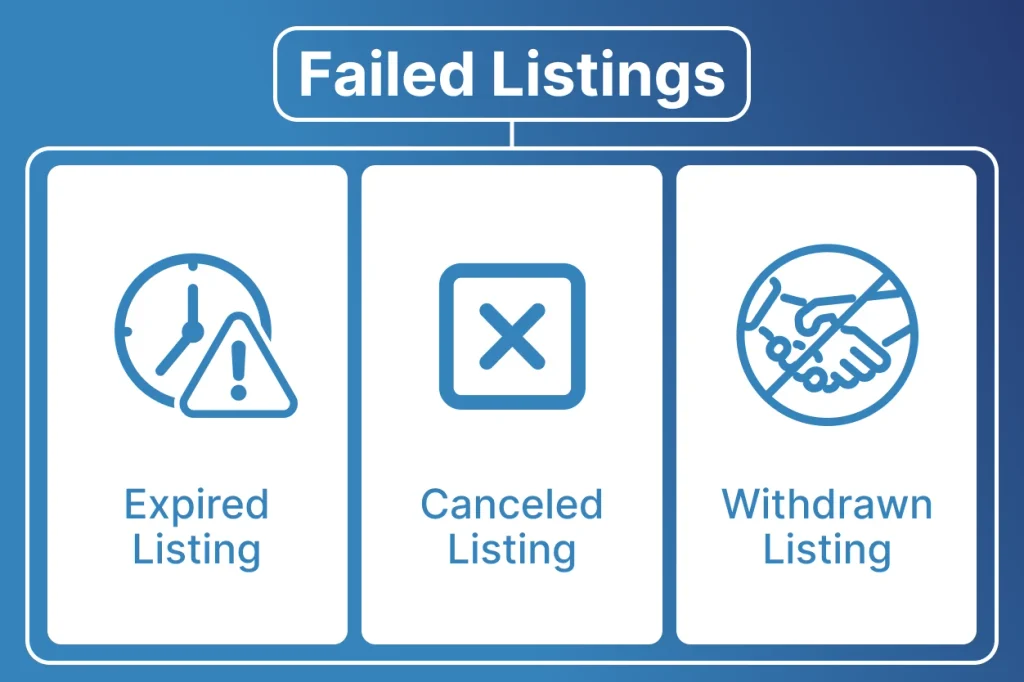
A failed listing is a property that was put on the market but didn’t sell. While the exact terminology can vary by MLS, there are several ways this can happen:
- Expired Listing: The property didn’t sell before the listing agreement expired.
- Canceled Listing: The listing was canceled before the agreement was scheduled to end.
- Withdrawn Listing: The property was taken off the market, often because the seller’s plans or circumstances changed.
It’s also important to remember that an expired listing is a type of failed listing, but not every failed listing is an expired listing.
For investors, these differences provide useful context. An expired listing may have a seller who still wants to sell but needs a different solution. A withdrawn listing could mean the owner has changed their mind entirely.
Why Do Real Estate Listings Fail?
A listing can fail for many reasons, and sometimes several factors are at play at once. Some of the most common include:
| Reason | What May Have Happened |
| Price Was Too High | The asking price may not have aligned with comparable sales or what buyers were willing to pay. |
| Property Condition | Repairs, deferred maintenance, outdated features, or tenant issues may have discouraged buyers. |
| Marketing Fell Short | The property may not have received enough exposure or generated sufficient buyer interest. |
| Market Conditions | Buyer demand, available inventory, financing conditions, or competition may have made the property harder to sell. |
| Seller Circumstances Changed | Relocation, finances, family responsibilities, or other plans may have changed while the home was listed. |
The important thing is not to assume that any of these circumstances automatically make someone a motivated seller. Instead, they provide context for understanding why the property didn’t sell and whether the homeowner may now be open to a different solution.
The Psychology Behind Failed Listings

For many homeowners, a property is more than an asset. It often holds sentimental value, making it difficult to look at a sale purely through the lens of current market value.
Several psychological factors can influence how a homeowner approaches a sale and how their thinking may change when that sale doesn’t go as planned.
Emotional Attachment Can Influence Perceived Value
Homeowners may place additional value on a property because of their personal connection to it. Years of memories, renovations, and money invested can all influence what they believe the home is worth.
The problem is that buyers don’t necessarily assign the same value to those things. This disconnect between personal value and market value can make it harder for sellers to adjust their expectations when a property isn’t attracting offers.
Loss Aversion Can Make Price Reductions Difficult
People generally dislike losing something more than they enjoy an equivalent gain, a behavioral tendency known as loss aversion.
Research into seller behavior has found that homeowners were roughly 2.5 times more sensitive to losses than gains relative to what they originally paid for their property.
As a result, some sellers may hold firm on price even when market feedback suggests the property is worth less.
Anchoring Can Keep Sellers Focused on a Number
Sellers can also become anchored to a number, whether that’s what they originally paid, their first asking price, an appraisal, or a nearby home’s sale price. Once that number becomes the benchmark, offers below it can feel disproportionately low, even as new market information comes in.
A well-known experiment by researchers Gregory Northcraft and Margaret Neale found that even real estate professionals were influenced by a property’s listing price when estimating its value, despite believing the listing price had little influence on their assessment.
Reference Points Can Shape What Feels Like a “Good” Offer
While anchoring helps explain why a particular number sticks, reference dependence helps explain why being above or below a meaningful number can feel like a gain or loss.
Consider a homeowner who paid $410,000 for a property. A $400,000 offer might be reasonable based on today’s market, but accepting it still means selling below their purchase price. That reference point can make the offer feel less attractive than the market data alone would suggest.
Some listings may fail partly because sellers are reluctant to move away from a psychologically important price.
Confirmation Bias Can Make Market Feedback Harder to Accept
A seller who already believes their home is worth a certain amount may naturally pay more attention to information that reinforces that belief. A high-priced neighboring sale may feel especially meaningful, while several lower offers or negative buyer comments may be easier to dismiss.
After weeks or months on the market, however, repeated feedback can become increasingly difficult for sellers to ignore.
Why Some Failed Listing Sellers May Be Ready to Talk
A failed listing doesn’t automatically turn a homeowner into a motivated seller. Some may relist with another agent, wait for market conditions to improve, or decide they no longer want to sell.
That experience may also challenge some of the expectations and psychological biases they had when they first listed. A seller may reconsider the price they were anchored to, become more receptive to market feedback, or start weighing the cost of waiting against the loss they once associated with accepting a lower offer.
Their priorities may shift in several ways:
- They’ve had time to reconsider their expectations: Months of showings, offers, price reductions, or limited interest can provide real market feedback. They may now be more willing to discuss a price or solution they wouldn’t have considered initially.
- They may be tired of the selling process: Showings, inspections, repairs, negotiations, and deals falling through can take a toll. Convenience and certainty may begin to carry more weight alongside price.
- The cost of holding the property continues: Mortgage payments, property taxes, insurance, utilities, and maintenance don’t stop when a listing expires. For owners of vacant, inherited, or investment properties, waiting longer may become less appealing.
- Their situation may have become more urgent: a relocation, financial need, inherited property, an unwanted rental, or another life change may become more pressing as time passes.
- They may be open to a different way of selling: After an unsuccessful traditional sale, some homeowners may consider alternatives. An as-is purchase, flexible closing timeline, or simpler transaction could now offer value that wasn’t as important when they first listed.
The key is not to assume a failed listing means the homeowner is desperate to sell. It simply gives you a reason to dig deeper into the data, start a conversation, and understand what, if anything, has changed.
How to Approach The Sellers

There’s no single script that works for every seller of a failed listing. One homeowner may still be firm on price, while another may be ready to explore a different way of selling. That makes empathy, good timing, and clear information about what you can offer more valuable than jumping straight into a sales pitch.
A few best practices include:
- Know the property before you call: Review the property and listing information available to you before reaching out. A curated failed-listings lead list with relevant property details can help you understand the opportunity and enter the conversation better informed.
- Start with curiosity: Find out whether they’re still interested in selling before assuming they are.
- Listen for what has changed: Ask about their experience and what matters to them now. Their priorities may be different from when they first listed.
- Make the conversation relevant: If speed, an as-is sale, or flexibility matters to them, explain how your offer could address that specific need rather than giving a generic pitch.
- Be clear and transparent: Explain who you are, why you’re calling, and what you can offer. Avoid making promises you can’t guarantee.
- Follow up at the right time: A seller who isn’t ready today may be more receptive later. If they’re open to staying in touch, ask when it makes sense to reconnect and keep notes on what matters to them. Consistent, relevant follow-ups can keep the conversation going without adding unnecessary pressure.
Common Mistakes That Can Hurt the Conversation
Even with the right intentions, a few mistakes can quickly make a seller less receptive. Here are some to avoid:
- Assuming they’re desperate to sell: A failed listing doesn’t automatically mean financial distress or urgency.
- Leading with a low offer: Understand the seller’s situation and priorities before talking numbers.
- Criticizing the previous agent: Even if the seller had a poor experience, blaming someone else does little to build your credibility.
- Ignoring what the seller tells you: A generic script can quickly feel impersonal if it doesn’t reflect what they’ve shared.
- Creating unnecessary pressure: Pushing for an immediate decision can undermine trust, especially if the seller is still considering their options.
- Following up without context: Repeating the same pitch on every call can be frustrating. Use what you learned previously to make follow-ups relevant.
At the end of the day, you’re not calling a “failed listing.” You’re calling a homeowner whose plans didn’t work out as expected. Keeping that in mind can make all the difference in how you approach the conversation.
Find and Connect With Failed Listing Leads Using BatchDialer
With the BatchDialer Lead Lists Add-On, you can build a Failed Listings lead list without leaving the platform. Simply choose your location and residential property type, select Failed Listing as your lead category, and choose how many leads you want to add.
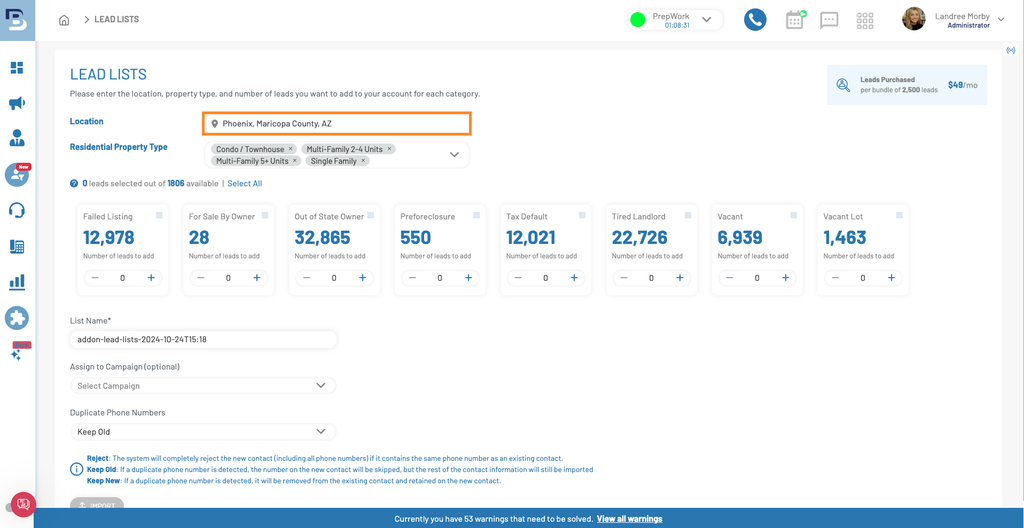
You can then create your list and even assign it directly to a campaign, making it easier to move from finding opportunities to starting outreach. BatchDialer can also scrub phone numbers against DNC and known litigator lists to help support more compliant outreach.
Want to try it yourself? Start your 7-day free trial of BatchDialer today.
However, don’t let that convenience replace preparation. Review the available property and listing information and do your homework before reaching out. Knowing the property you’re calling about can help you ask more relevant questions and have a more informed conversation with the homeowner.
Watch our complete BatchDialer tutorial for a step-by-step walkthrough of the platform, from managing leads and creating campaigns to dialing and more.
Pro Tip: Failed Listings are just one of the 8 lead lists available in BatchDialer. Depending on your strategy, you can also build lists such as For Sale By Owner, Out-of-State Owner, Pre-foreclosure, Tax Default, Tired Landlord, Vacant, and Vacant Lot leads.
FAQs
What is a failed listing in real estate?
A failed listing is a property that was listed for sale but did not sell. This can include expired, canceled, or withdrawn listings.
What is the difference between a failed listing and an expired listing?
An expired listing is a type of failed listing. It reaches the end of its listing agreement without selling, while failed listings can also include properties that were canceled or withdrawn.
Are failed listing owners motivated sellers?
Not necessarily. However, months of market feedback, holding costs, or an unsuccessful selling experience may cause some homeowners to reconsider their expectations and become more open to different selling options.
How does psychology affect failed real estate listings?
Seller psychology can influence how homeowners price their property and respond to offers or market feedback. Factors such as emotional attachment, loss aversion, anchoring, reference dependence, and confirmation bias may make it harder for some sellers to adjust their expectations. After a listing fails, however, months of market feedback may cause some homeowners to reassess those expectations and become more open to different selling options.
Why are failed listings potential leads for real estate investors?
The homeowner has already demonstrated an interest in selling. If their priorities have changed, they may now be willing to consider options such as an as-is sale, flexible closing timeline, or another solution an investor can provide.
How should investors approach failed listing sellers?
Learn about the property before reaching out, avoid assuming the owner is desperate to sell, and focus on understanding what matters to them now. Be transparent about what you can offer and follow up at an appropriate time if they aren’t ready.
How can I find failed listing leads?
BatchDialer’s Lead Lists Add-On includes a Failed Listings category that lets you build lists of properties with MLS listings that were canceled, expired, or taken off the market without selling. You can then create your list and assign leads directly to a BatchDialer campaign for outreach.
Start a 7-day free trial of BatchDialer to explore the platform and start building your outreach campaigns.