


Disclaimer: This article is for informational purposes only and does not constitute legal, financial, or investment advice. Verify property information independently and follow all applicable federal, state, and local outreach laws and regulations.
| What is a Lead List? A real estate lead list is a collection of properties and owner information selected for potential investment opportunities and outreach. To pull a lead list, choose your market, set filters that match your investment strategy, and save the properties that meet your criteria. Tools like BatchLeads help you refine results, combine motivation signals, and access available owner info for easy outreach. |
Key Takeaways:
- A bigger list isn’t always a better list. Focus on properties that fit your strategy and local market, and combine indicators like vacancy, equity, and ownership length to prioritize research.
- Good leads need ongoing attention. Keep property and contact details up to date, review changes, and use notes and call outcomes to make follow-ups more relevant.
- Your next list should reflect what you’ve learned. Track qualified conversations, offers, deals, and campaign costs to improve both your search criteria and outreach.
Pulling a real estate lead list takes only a few minutes. Pulling the right list takes more thought.
A list may contain thousands of properties and still yield weak results if it does not fit your market, investment strategy, or outreach plan. The problem is not always a lack of leads. Often, it is how those leads were selected, organized, and worked.
Here are 10 common mistakes investors make when building lead lists and what to do instead.
1. Starting Without a Clear Ideal Lead

Some investors open a property search and begin selecting filters before deciding what they are actually looking for. That often produces a mixed list of properties with little in common.
Start by defining your ideal opportunity. Consider:
- Investment strategy
- Property type
- Price range
- Location
- Equity or loan-to-value range
- Ownership situation
- Condition, age, or other relevant property details
For example, a wholesaler could focus on property types and ZIP codes preferred by their buyers, then add high equity and absentee ownership. A buy-and-hold investor might look for long-term absentee owners in areas with rental demand, while a flipper could search for older, vacant homes where renovated properties are selling.
2. Searching Too Broadly
A citywide list of absentee owners or high-equity properties may look promising, but a single filter may include many owners who are unlikely to be a good fit for your offer.
Narrow the search using criteria that might include property type, estimated value, equity, ownership length, occupancy, or lot size. Begin with a manageable area and expand only after you understand the results.
The goal is not to make the list as small as possible. It is to remove properties that clearly do not match your buying criteria.
3. Relying on Only One Motivation Indicator
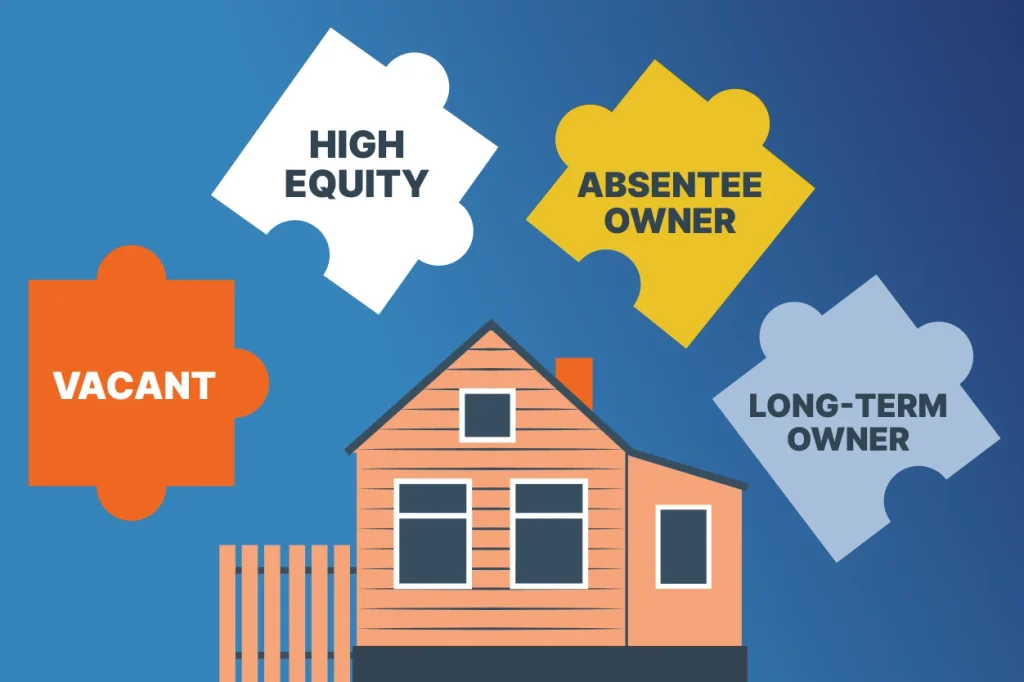
Quick Lists, such as those in BatchLeads, offer a convenient starting point for finding properties with indicators like vacancy, absentee ownership, or high equity. The mistake is treating that one indicator as the full story.
Start with a relevant list, then narrow it using additional criteria. For example, an absentee-owner list could become more focused when you add high equity and a long ownership period. A vacant property may deserve closer attention if the mailing address is out of state.
Look for overlapping signals, then use list stacking to identify properties that appear across multiple lists. Those overlaps help you decide which properties to research first, without assuming an owner is ready to sell.
Related Watch: How to List Stack Real Estate Leads
4. Ignoring Local Market Conditions
The same list criteria will not perform equally in every market. Price points, housing inventory, investor competition, rental demand, and common property types can vary by ZIP code or neighborhood.
If you’re new to the market, connect with experienced investors and local agents through real estate meetups or investor groups. Ask where they’re buying, what buyers and renters want, and what challenges they’re seeing. Their firsthand experience can help you make sense of the data and refine your search.
Market knowledge helps turn a generic list into one built for a specific area.
Pro Tip: Before heading to a local meetup, use the comping tool in BatchLeads to review recent comparable sales. You’ll have a better sense of local prices and specific questions to discuss with experienced investors.
5. Choosing Quantity Over Relevance
A list with 20,000 records can feel more valuable than one with 1,000. But every additional record consumes marketing budget and follow-up time.
Instead of asking, “How many leads can I pull?” ask, “How many can my team work properly?” A smaller, well-defined list often makes it easier to research properties, personalize outreach, and follow up consistently.
If your search produces too many records, tighten the criteria or divide the list into priority groups before launching a campaign. This brings us back to defining your ideal lead: use those criteria to decide which properties belong on your list before deciding how many to pull.
6. Using Old or Incomplete Information

Property and owner circumstances change quickly, so updated property details and contact information are critical; otherwise, your research and outreach go in the wrong direction.
Use a platform like BatchLeads to access accurate property and owner information. Before launching a campaign, review ownership, property status, mailing addresses, and available phone numbers through skip tracing. Remove duplicates and properties that no longer fit your criteria, and flag incorrect contact details as you discover them.
Use these insights to start an informed conversation, then learn more about the owner’s selling plans, timeline, and the property’s condition.
7. Using the Same List for Every Investment Strategy
One of the basics of real estate investing is matching the property to the strategy. Your lead lists should follow the same principle.
Here are a few things to keep in mind:
- Fix and flip: Look for homes with renovation potential in areas where comparable renovated properties are selling. The purchase price needs to leave room for repairs, holding costs, selling expenses, and profit.
- Buy and hold: Focus on properties in areas with rental demand and prices that could support your cash flow goals after expenses.
- Wholesaling: Build lists around what your buyers actually want, including their preferred neighborhoods, property types, price ranges, and tolerance for repairs.
- Vacant land: Narrow your search by location and lot size, then research zoning, road access, and utilities to assess whether the land fits its intended use.
Pro Tip: Let your exit strategy guide your search criteria. And build each list backward from the deal you want to complete. Do not force one general-purpose list into every campaign.
8. Pulling a List Once and Never Refreshing It
A lead list is a snapshot, not a permanent asset. New owners enter pre-foreclosure, listings expire, properties become vacant, and equity positions change.
Add screengrab from BatchLeads (Pranav)
Choose a software like BatchLeads that automatically updates your saved property data and categorizes it through Quick Filters. Or if you manage lists manually, set a schedule to rerun searches and update records, reviewing time-sensitive lists more often.
Refreshing also does not mean contacting every record again. Review what changed, remove records that no longer qualify, and follow applicable outreach rules.
9. Building the List Without a Follow-Up Plan
Investors sometimes spend hours refining a list but wait until afterward to decide how they will contact owners. That creates gaps between research and action.
Before pulling the list, try answering:
- Which outreach channels will you use?
- How will leads be assigned?
- How often will you follow up?
- What message fits the list?
- How will responses and opt-outs be recorded?
- What compliance checks are required?
Your message should reflect what you know without making unwanted assumptions. For example, you can ask whether an owner has considered selling without mentioning sensitive circumstances or presenting an estimated property detail, such as the property’s value or the owner’s equity.
Pro Tip: When calling through BatchLeads, you can view property details and use real-time AI prompts to guide the conversation. Notes help you pick up where you left off, while call dispositions make it easier to filter leads for follow-up. You can also include Direct Mail in your outreach plan to stay in touch through another channel.
10. Ignoring Campaign Results
If you keep pulling lists without reviewing the results of the previous ones, you risk repeating the same mistakes. Campaign results help you understand which search criteria lead to useful conversations and where you need to adjust.
Give each list a clear name and use tags to track why properties were included.
Then compare:
- Contact rates: Are you reaching owners?
- Qualified conversations: Do the properties and selling plans fit your strategy?
- Next steps: Are conversations leading to appointments, offers, or deals?
- Costs: How much are you spending to generate those opportunities?
A low contact rate could indicate an issue with contact information or outreach. If you’re reaching owners but their properties rarely fit, revisit your search criteria.
Change one thing at a time, such as the location, equity range, or outreach approach, so you can see what actually makes a difference.
Find Better Leads and Connect With Owners Using BatchLeads
BatchLeads brings property research, lead management, and outreach together to help you move from finding an opportunity to starting a conversation.
Check out this quick walkthrough of adding quick filters in BatchLeads
Key Feature Highlights:
- Find relevant leads: Build searches around your buying criteria using property, ownership, mortgage, and location filters.
- Prioritize your research: Use list stacking to identify overlapping criteria and BatchRank AI to assess potential selling signals.
- Evaluate opportunities: Explore property and owner profiles, comparable sales, and rental estimates.
- Access owner contact details: Available phone numbers and email addresses are added when you save a property to a list.
- Connect with owners: Use Click-to-Dial and Direct Mail for outreach, with the optional Dialer AI add-on providing real-time conversation prompts.
- Keep leads organized: Use lists and tags to group properties and guide your next campaign.
Always remember, the strongest lead list is not necessarily the biggest or the most complicated. It is the one your business can understand, work consistently, and improve using real campaign feedback.
Ready to build more focused lead lists & and connect with owners?
Start your 7-day free trial of BatchLeads today.
FAQs
What is list stacking in real estate?
List stacking identifies properties that appear across multiple lists. For example, a property might appear on both a vacant-property list and an absentee-owner list. Overlapping signals can help you prioritize research, but they do not confirm that the owner wants to sell.
Can you apply too many filters when pulling a lead list?
Yes. Adding too many requirements can exclude properties worth reviewing. Start with essential buying criteria, then add filters that serve a clear purpose. If the results are too limited, remove one condition at a time.
What should wholesalers look for when building a lead list?
Wholesalers should start with their buyers’ preferred locations, property types, price ranges, and repair requirements. They can then add relevant ownership or equity filters to narrow the search. A useful list needs to fit both potential seller opportunities and actual buyer demand.
What is the difference between a lead and a qualified lead?
A lead is a property or owner identified as a potential opportunity. A qualified lead has been evaluated further to understand whether the property, the owner’s selling plans, and potential terms fit your investment strategy.
Should you exclude properties with low equity?
Not automatically. Equity is one part of the picture, and its importance depends on your strategy. Review the estimated value, outstanding debt, and potential purchase terms before deciding whether a property deserves further research.
How can you avoid contacting the same owner across multiple lists?
Check for duplicate property records and owners with multiple properties. Keep outreach history and notes organized so you can see previous conversations before launching another campaign.
What should you do when an owner says they are not ready to sell?
Ask whether they would welcome a future check-in and, if so, when. Record their response and preferred timing. This helps you plan relevant follow-ups while respecting their wishes.
Can you build lead lists from properties found while driving?
Yes. Driving for dollars can help you identify properties for further research based on visible conditions. BatchLeads’ mobile app lets you build lists, record notes, upload photos, and access available owner contact information while canvassing. However, it’s important to note that visible neglect alone does not confirm that an owner wants to sell.